Firefighter Cancer Support Resources
Job-induced cancers in firefighting are preventable, but the first step is gaining knowledge. The links provided below cover a range of resources and information for firefighters and those who work in the fire service regarding the risks of cancer associated with the profession. Firefighters face a higher risk of developing cancer due to exposure to harmful chemicals and toxins in the line of duty, and these links provide valuable information on how to reduce this risk. These resources include partnerships between organizations such as the International Association of Fire Fighters and the American Cancer Society, as well as studies and research initiatives like the Firefighter Cancer Cohort Study established by FEMA.
Cancer Support Resources
The links below encompass a comprehensive collection of resources, support networks, and informational content from the IAFC, Cancer.org, the NFPA and others. These resources offer guidance in a variety of areas from proper equipment cleaning, reducing exposure to carcinogens, and best practices for reducing the overall risk of cancer among firefighters.
IAFF American Cancer Society
www.iafc.org
IAFF American Cancer Society is a partnership between the International Association of Fire Fighters and the American Cancer Society, focused on reducing the risk of cancer among firefighters and improving treatment outcomes.
Firefighters and Cancer
www.cancer.org
Cancer.org's Firefighters and Cancer page explores the link between firefighting and cancer, including the chemicals and toxins firefighters are exposed to on the job.
Firefighter Cancer Support Network
firefightercancersupport.org
The Firefighter Cancer Support Network provides resources and support to firefighters who have been diagnosed with cancer, as well as their families and departments.
IAFF CANCER AWARENESS AND PREVENTION RESOURCES
www.iaff.org
Resources from the International Association of Fire Fighters including an online cancer awareness course.
Firefighter Cancer Cohort Study (established by FEMA in 2016)
www.ffccs.org
The Firefighter Cancer Cohort Study, established by FEMA in 2016, is a long-term study exploring the links between firefighting and cancer, with the goal of improving prevention and treatment.
FireRescue1 Cancer Content Hub
www.firerescue1.com
FireRescue1's Cancer Content Hub provides news, resources, and best practices for firefighters and departments to reduce the risk of cancer and improve treatment outcomes.
Firefighters and Cancer (NFPA)
www.nfpa.org
The NFPA's Firefighters and Cancer page provides resources and information on best practices for reducing the risk of cancer among firefighters, including equipment cleaning and decontamination.
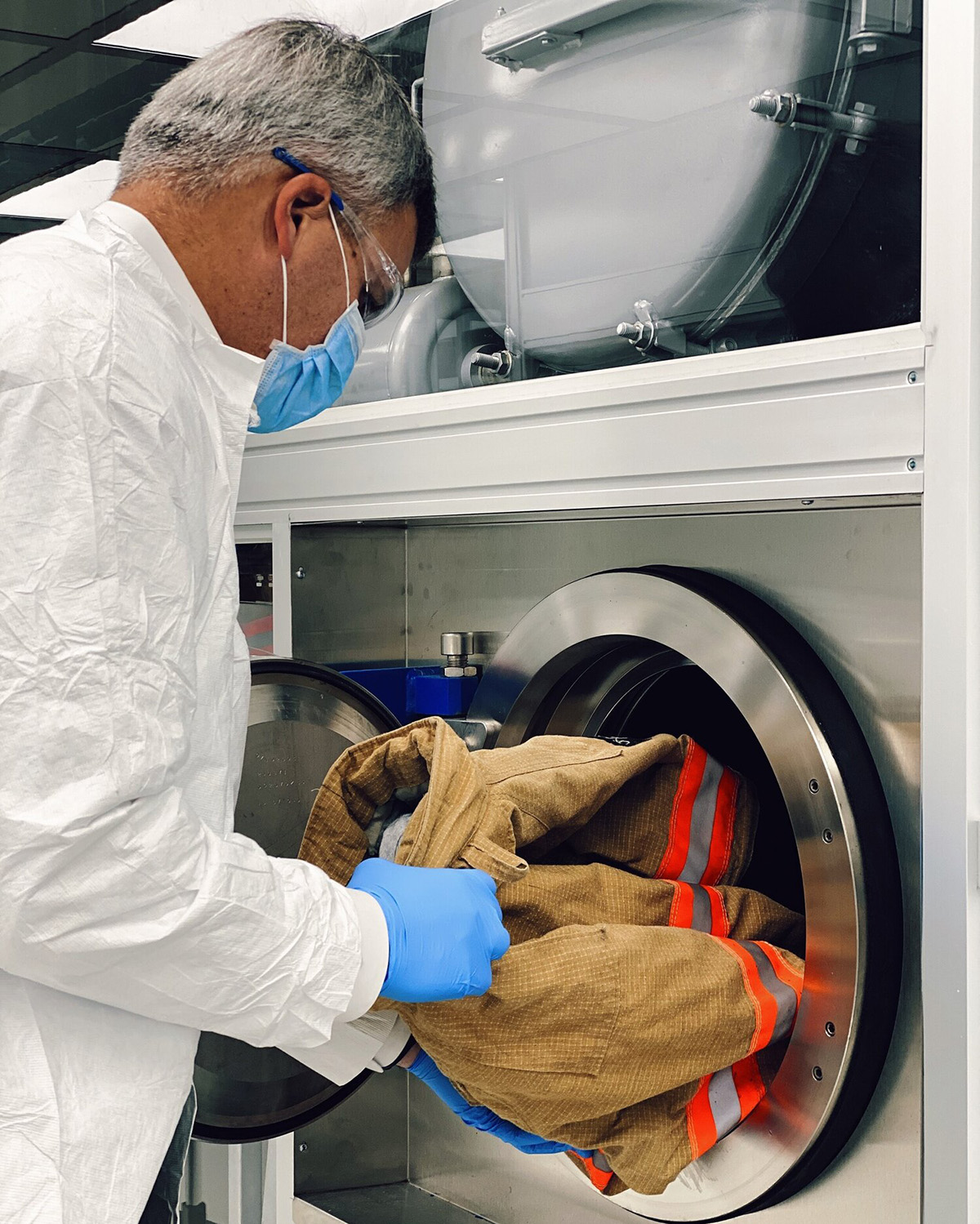
What you should know about your turnout gear and cancer.
The Danger Doesn’t Stop When The Fire Is Out.
Years of research have clearly documented firefighters’ exposure to carcinogens in all phases of fire response, including overhaul. Recent studies have also explored the combustion of all the new synthetic products present in homes, cars and factories.
It is important to note that carcinogen exposure does not require visible smoke. Chronic exposure to heat, smoke and toxicants puts firefighters at higher risk for developing cancer when compared to non-firefighters.
It is important to note that carcinogen exposure does not require visible smoke. Chronic exposure to heat, smoke and toxicants puts firefighters at higher risk for developing cancer when compared to non-firefighters.
On The Scene
When responding, firefighters are constantly exposed to carcinogens. A wide range of chemicals have been detected in smoke and soot during fire suppression and overhaul. These contaminants completely penetrate personal protective equipment (PPE) and the gear you use on a fire. And they remain there until washed off.
Back At The House
Contaminants that firefighters encounter during fire responses can be tracked back to the fire stations. These lingering contaminants can lead to additional exposures if firefighters do not perform preliminary exposure reduction – these contaminants can spread to the apparatus’ cab and back to the fire station.
The List
From SVOC to PFAS, the list of carcinogens and other toxins firefighters are exposed to on the job is long and terrible. Through lab testing, our liquid CO2+ process has been proven to dramatically reduce all of these. This list was compiled by NFPA, EPA and other organizations.
Arsenic
Cancers of the skin, lung, and liver.
Asbestos
Cancers of the lung, larynx, and mesothelioma.
Benzene
Leukemia.
Benzo[a]pyrene
Cancers of the lung, bladder, and skin.
1,3 Butadiene
Blood cancers.
Cadmium
Lung cancer.
Formaldehyde
Nasopharyngeal cancer.
Radioactivity
(gamma activity)
(gamma activity)
All cancer sites combined.
Radionuclides
(alpha & beta emitting)
(alpha & beta emitting)
All cancer sites combined.
Silica
(crystalline)
(crystalline)
Lung cancer.
Sulfuric acid
Laryngeal cancer.
TCDD
(2,3,7,8-Tetrachlorodibenzo-p-dioxin)
(2,3,7,8-Tetrachlorodibenzo-p-dioxin)
Lung cancer, non-Hodgkin lymphoma, sarcoma; all cancer sites combined.
Is there any wonder that in 2022 the IARC classified occupational exposure as a firefighter as “carcinogenic to humans”?
How To Fight Safely
But there is something you can do to fight the effects of carcinogens on the job. To protect yourself from exposure, the following actions are recommended:
Following these steps is the safest way to fight fires.
Following these steps is the safest way to fight fires.