By: Emergency Technical Decon
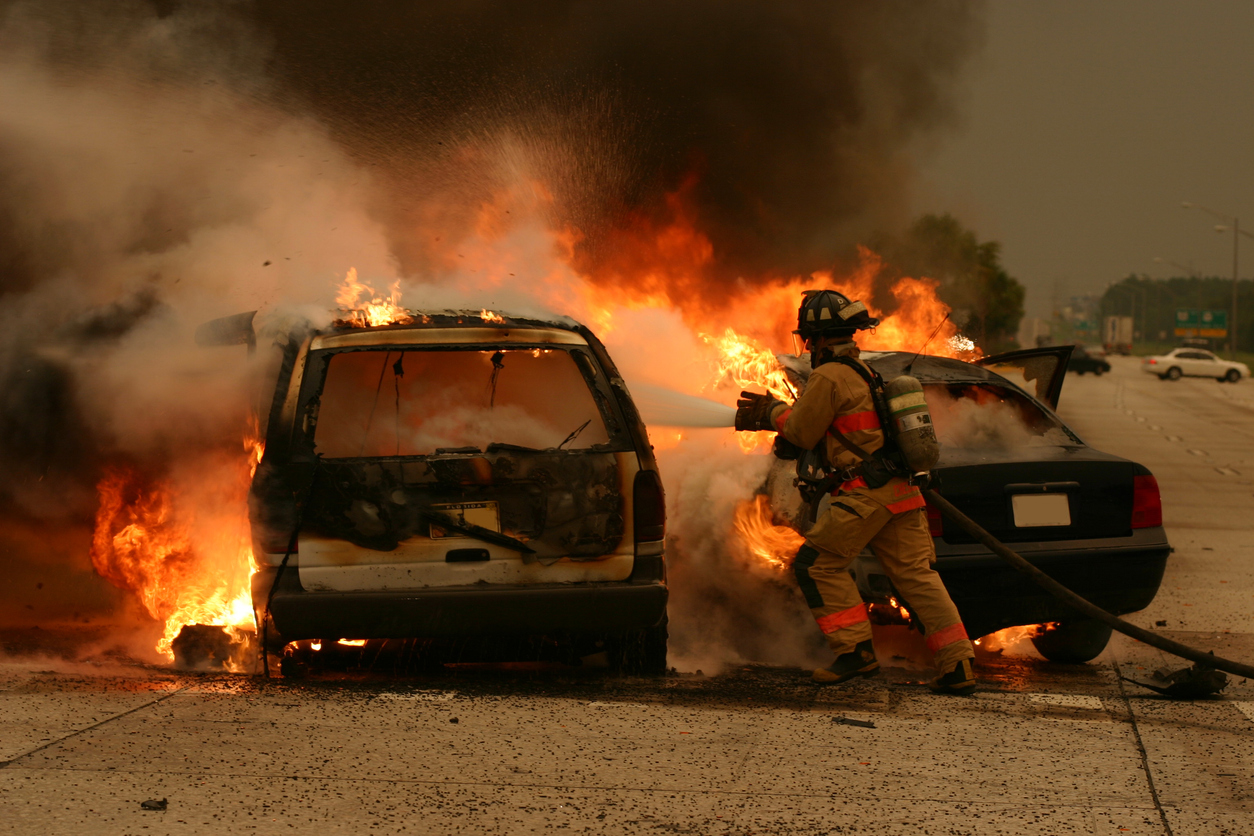
As electric vehicles become more common, lithium-ion battery fires are no longer rare incidents – they are a growing part of the modern fireground.
These fires are not simply a new version of a familiar challenge. They introduce a different level of complexity, a different burn profile, and a significantly different exposure risk for firefighters.
Emerging research continues to highlight that lithium-ion battery fires produce a unique and highly toxic mix of gases, particulates, and residues. Understanding these risks is critical to protecting firefighters not just during suppression, but long after the incident ends.
What Makes Lithium-Ion Fires Different
Unlike traditional combustion, lithium-ion battery fires are driven by thermal runaway – a chain reaction within the battery cells that generates extreme heat, flammable gases, and sustained re-ignition potential.
These fires can:
• Burn hotter and longer than conventional vehicle fires
• Reignite hours or even days after initial suppression
• Release pressurized jets of flame and toxic vapor
But beyond the operational challenges, the chemical hazards are what set these fires apart.
Recent research published through Springer confirms that lithium-ion battery fires release a complex mixture of toxic compounds, including volatile organic compounds (VOCs), semi-volatile organic compounds (SVOCs), and hazardous gases such as hydrogen fluoride (HF).
These substances are not only immediately dangerous – they also contribute to long-term health risks through inhalation and dermal exposure.
A Complex and Toxic Chemical Profile
Lithium-ion battery fires generate a range of hazardous byproducts that differ from traditional fires in both composition and concentration.
These include:
• Hydrogen fluoride (HF), a highly corrosive gas that can cause severe respiratory and skin damage
• Heavy metals released from battery components
• SVOCs and PAHs associated with carcinogenic risk
• Electrolyte breakdown products that form toxic aerosols and particulates
The Springer research highlights that many of these compounds are present in both gaseous and particulate forms, increasing the likelihood of inhalation and surface contamination.
This creates a dual-exposure risk: immediate inhalation hazards during the incident and persistent contamination that remains on gear and equipment afterward.
Exposure Doesn’t End at Suppression
One of the most critical findings across lithium-ion fire research is that exposure continues after the fire is extinguished.
Toxic residues from battery fires can:
• Settle on turnout gear and apparatus
• Penetrate fabric layers of PPE
• Transfer to skin and station environments
Combined with the risk of re-ignition, this creates prolonged exposure windows that extend far beyond the initial response.
Firefighters may leave the scene, but the contaminants remain with them.
This mirrors broader research across the fire service showing that post-incident exposure is a significant contributor to long-term health risks, including cancer.
The Challenge of Removing Lithium-Ion Contaminants
The chemical complexity of lithium-ion battery fires presents a major challenge for traditional cleaning methods.
Many of the compounds produced – particularly SVOCs, PAHs, and certain electrolyte residues – are not effectively removed through water-based extraction alone. These contaminants can be hydrophobic, deeply embedded, and resistant to standard cleaning processes.
As a result, gear that appears clean may still contain hazardous residues.This reinforces a critical point: visual cleanliness does not equal decontamination.
Adapting to an Evolving Threat
The rise of lithium-ion battery fires is part of a broader shift in fireground conditions. Modern materials, energy storage systems, and vehicle technologies are changing what burns – and what firefighters are exposed to.
Departments must adapt by:
• Recognizing lithium-ion fires as a high-exposure event
• Implementing immediate and advanced decontamination protocols
• Evaluating cleaning methods based on their ability to remove complex chemical contaminants
This is not just about operational response. It is about long-term health protection.
A Data-Driven Approach to Decontamination
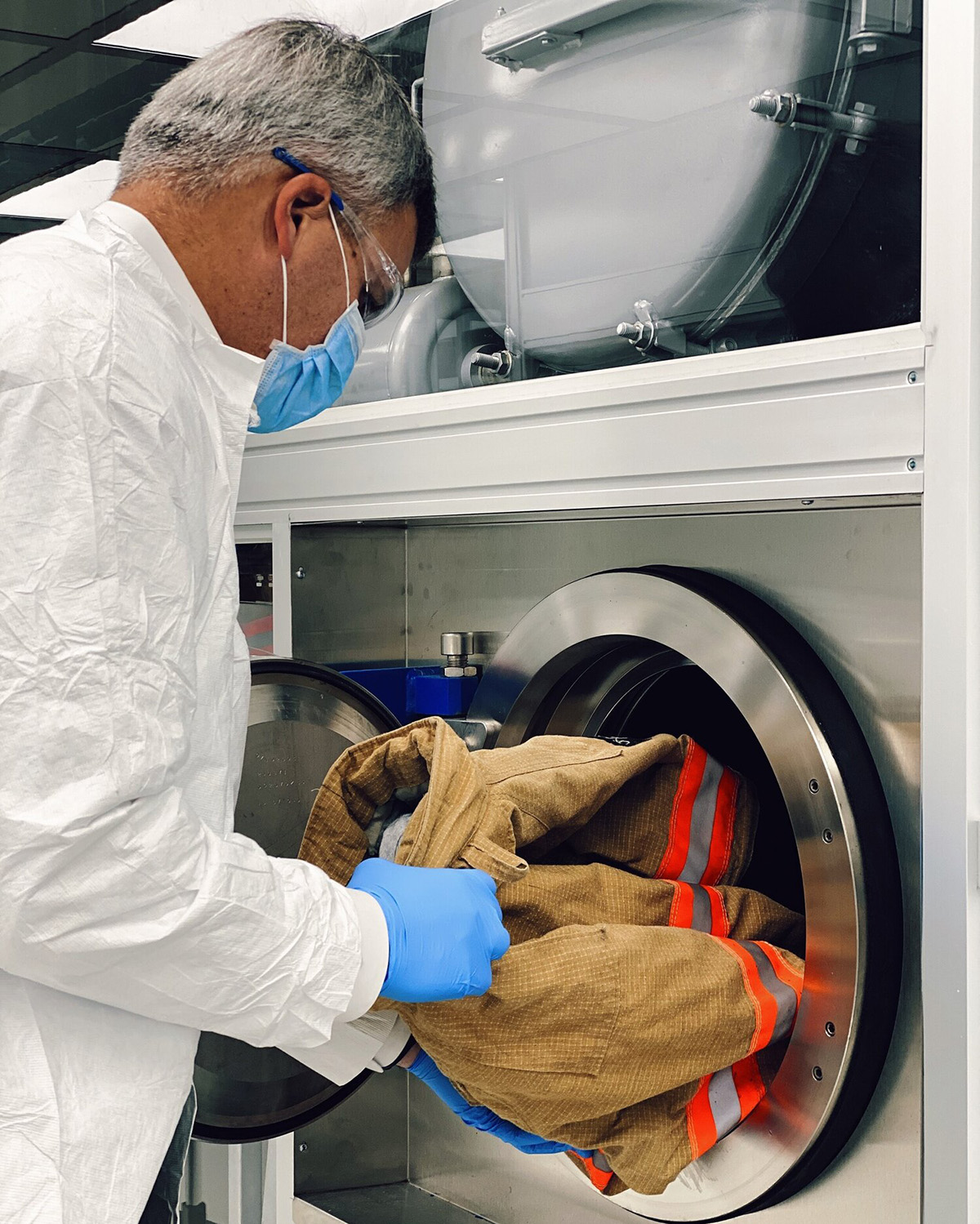
To effectively address lithium-ion contamination, cleaning methods must be capable of removing both inorganic and organic compounds embedded in turnout gear.
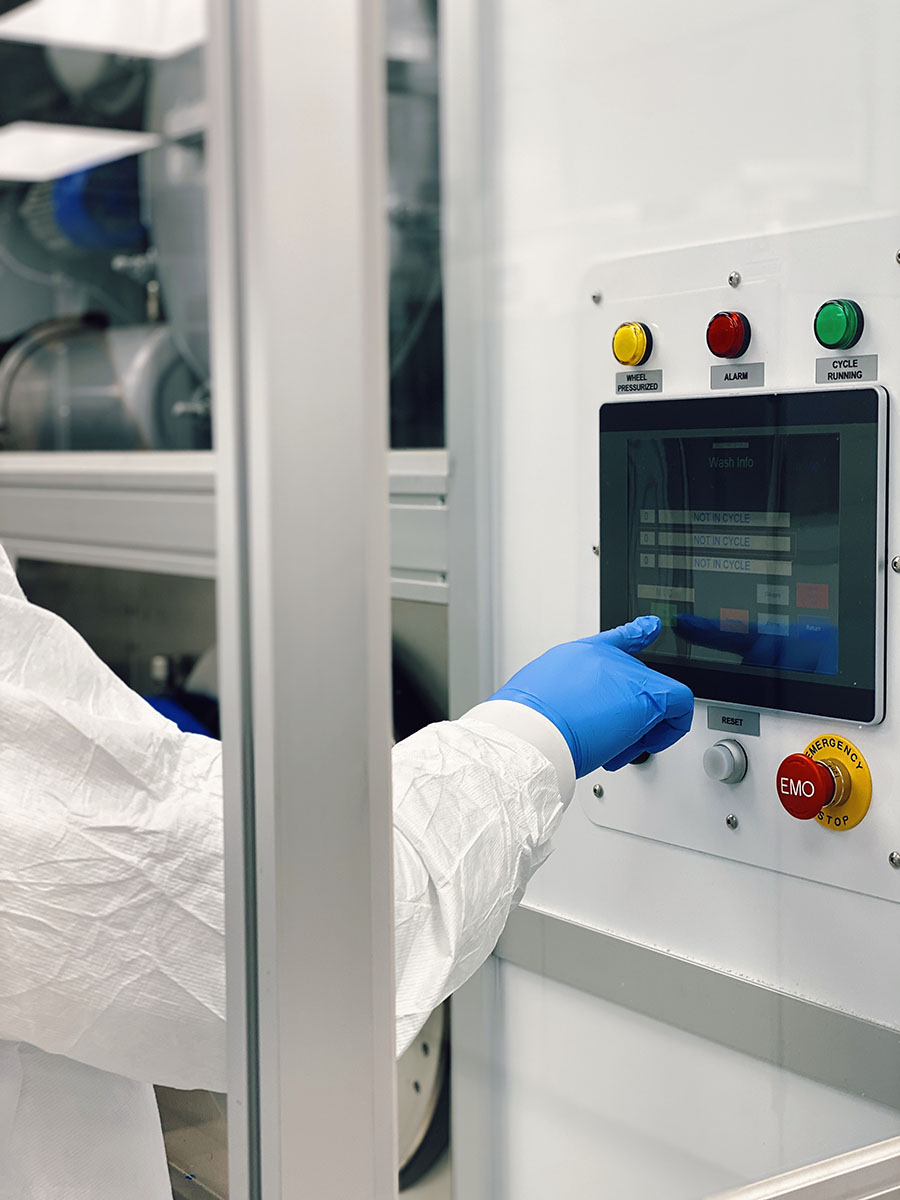
Advanced solutions like Liquid CO2+ are designed to meet this need, targeting a wide range of contaminants, including:
• SVOCs and PAHs
• Heavy metals
• PFAS and other persistent compounds
Independent data shows:
• 99.9% removal or undetectable levels of SVOCs
• 99.8% removal of heavy metals
• Over 84% PFAS removal
This level of performance is critical when dealing with the complex residue left behind by lithium-ion battery fires.
By removing contaminants at their source, departments can reduce both immediate and long-term exposure risks.
Protecting Firefighters in a Changing Environment
Lithium-ion battery fires are not a future concern – they are a present and growing reality.
As the fireground evolves, so must the strategies used to protect those responding to it. This includes not only how fires are fought, but how contamination is managed afterward.
Firefighters are facing new hazards layered on top of existing ones. The approach to health and safety must reflect that complexity.
Take the Next Step Toward Modern Protection
The risks associated with lithium-ion battery fires are clear – from toxic gas exposure to persistent contamination.
Contact Emergency Technical Decon to learn how Liquid CO2+ helps departments address the full scope of modern fireground hazards, reducing exposure and protecting firefighters long after the call is over.