By: ETD Team
How much time truly goes into an NFPA-compliant, end-to-end turnout gear inspection?
Behind every coat and pant set is a detailed, labor-intensive process designed to meet stringent documentation, cleaning, inspection, and repair requirements under NFPA 1851 and the updated NFPA 1850 standard. A compliant advanced inspection is not a quick visual check. It is a structured, multi-team workflow that can span 2–4+ hours per set from start to finish, depending on condition and repair needs.
Here is what that process actually looks like:
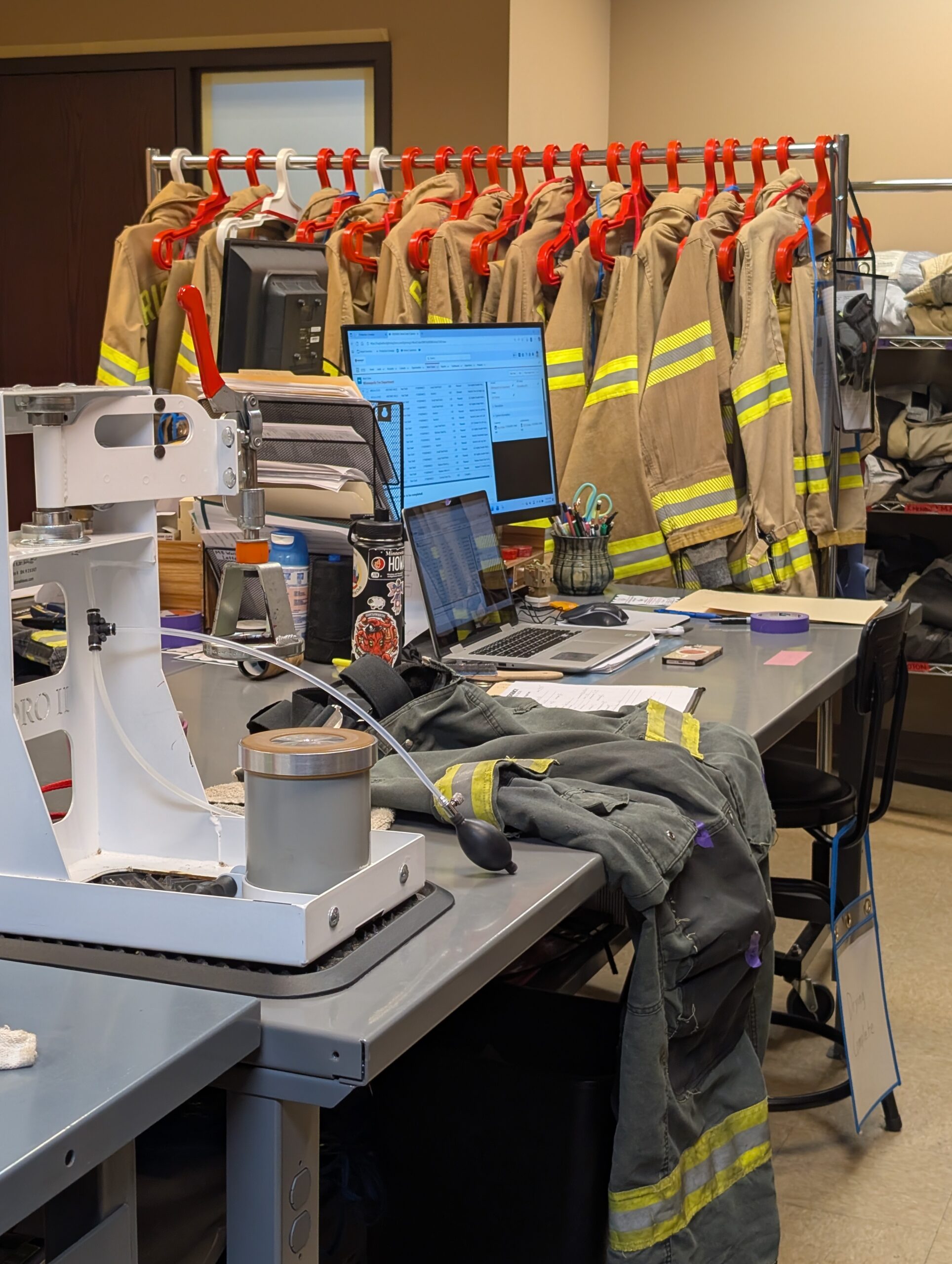
Step 1: Intake and Digital Documentation
Estimated time: 15–30 minutes per set
The process begins before a single seam is opened.
At intake, trained technicians:
- Log manufacturer, model, and serial numbers
- Verify age and service history
- Confirm compliance with the 10-year retirement requirement
- Document prior repairs and cleaning cycles
- Scan and track the gear in a digital system for full chain-of-custody control
NFPA standards require detailed recordkeeping for the life of the garment. Every inspection, advanced cleaning, repair, and contaminant removal cycle must be documented and retrievable. Without disciplined intake and tracking, compliance breaks down before inspection even begins.
Step 2: Cleaning and Contaminant Removal
Cleaning is a structured, documented phase of the lifecycle process – not a standalone task. It involves:
-
Intake verification and sorting: After digital intake is confirmed, gear is sorted according to manufacturer guidance and department instructions. Any visible damage or missing components are documented before cleaning begins to preserve full chain-of-custody tracking under NFPA 1851 and 1850 requirements.
-
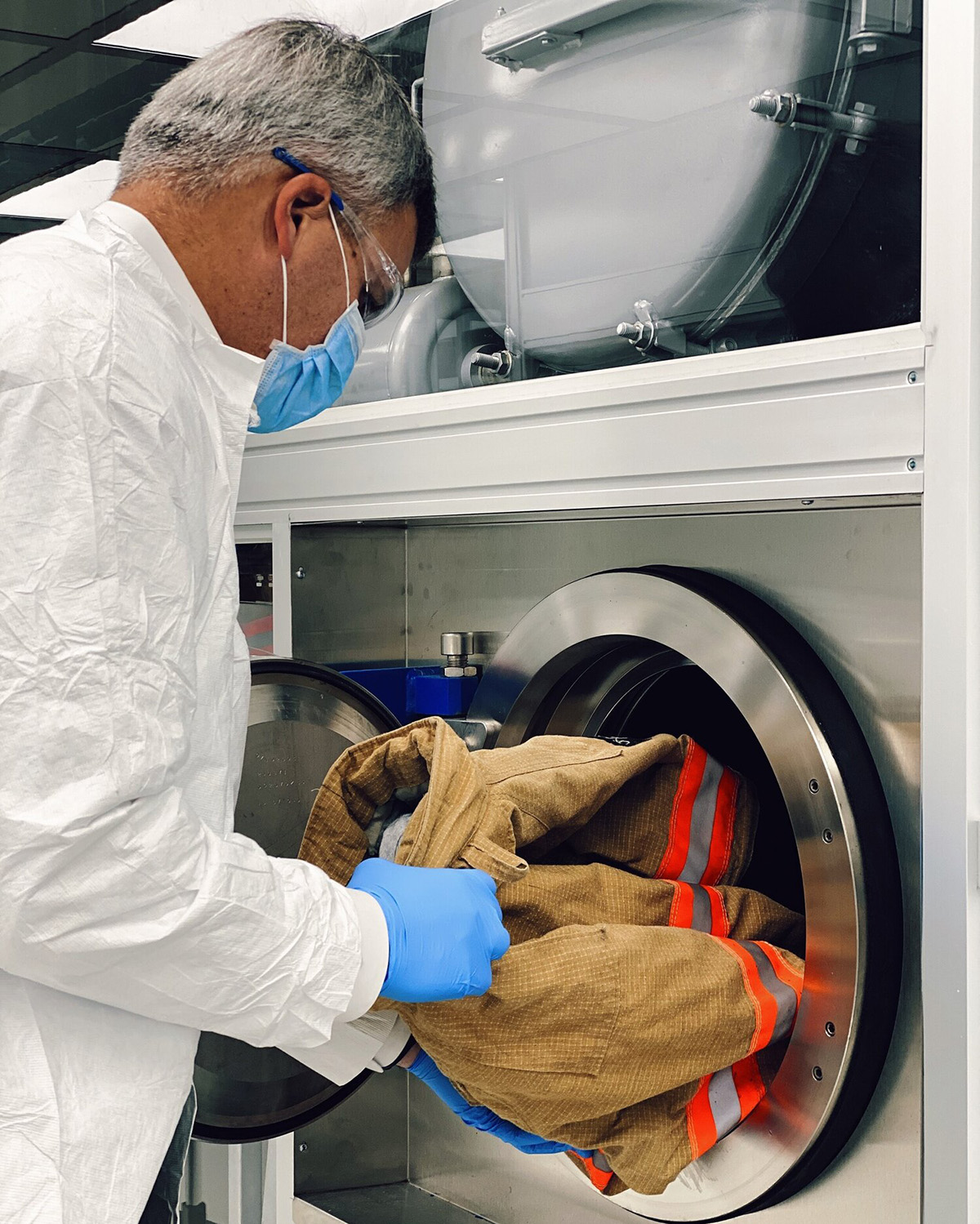
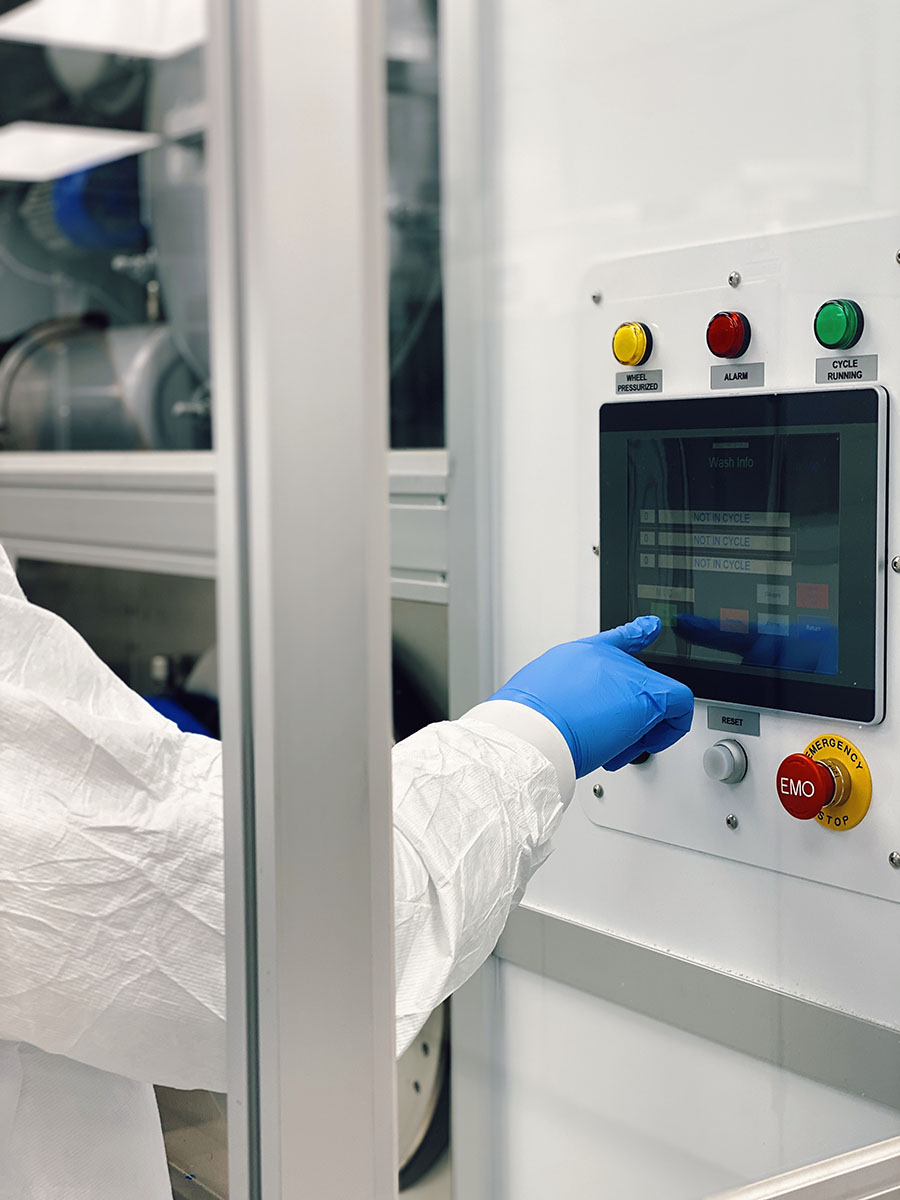
Controlled loading and sealed system start: Gear is strategically loaded into the Liquid CO2+ chamber to ensure consistent cleaning performance across shells and liners. The chamber is sealed and the closed-loop cycle begins, preventing external discharge during the process.
-
Liquid CO2+ cleaning phase: Liquid CO2+ circulates through and around the garment layers, penetrating fabrics to lift and remove embedded contaminants. This method has been shown to remove more than 84% of PFAS while minimizing mechanical agitation that can degrade stitching, outer shells, and moisture barriers over repeated cycles.
-
Contaminant extraction and containment: As contaminants are removed, they are captured and separated within the closed-loop system rather than discharged as wastewater. This containment protects both environmental systems and facility operations.
-
Post-clean review and transition to inspection: Once the cycle is complete and the chamber is safely depressurized, gear is unloaded and visually reviewed. With soils and toxic residues removed, technicians can more accurately identify trim degradation, seam stress, barrier compromise, and structural damage before moving the garment into pre-inspection evaluation and advanced inspection.
Step 3: Pre-Inspection Evaluation
Estimated time: 20–30 minutes
After initial decontamination, technicians perform a structured visual assessment before full disassembly.
This evaluation identifies:
- Thermal damage
- Abrasion and high-wear points
- Hardware failures
- Reflective trim degradation
- Visible contamination staining
This step determines the next actions. Some garments proceed to advanced inspection. Others may require immediate triage or department consultation if significant safety concerns are identified.
Step 4: Advanced Inspection
Estimated time: 45–75 minutes per set
Under NFPA requirements, advanced inspections go beyond surface-level checks. Gear is disassembled and each layer evaluated individually:
- Outer shell
- Moisture barrier
- Thermal liner
- Seam assemblies
- Stitching strength and fabric integrity
- Closures, hook-and-loop, zippers, and hardware
- Reflective trim, retroreflectivity and integrity
Moisture barriers are examined for delamination, rips, holes, and compromise. Thermal liners are checked for cuts, tears, and compression damage. Seams are inspected for separation and thread failure.
Each finding is documented. Each repair recommendation is logged. Each compliance checkpoint is verified.
This level of inspection cannot be rushed. It is systematic, deliberate, and standardized to meet NFPA 1851 and 1850 criteria.
Step 5: Structural Repairs and Modifications
Time varies significantly based on scope.
While repairs are technically separate from inspection, they are part of the start-to-finish lifecycle of compliant gear management.
Repair time is not a fixed estimate. A simple bartack reinforcement may take only minutes. Reconstructing a boot cuff or replacing a major panel can take well over an hour. The scope of damage determines labor time.
Certified repair technicians may:
- Replace damaged panels
- Patch rips, tears, and cuts
- Reconstruct seam assemblies
- Repair or replace moisture barriers
- Reattach or replace reflective trim
- Reinforce high-stress areas
Repairs must follow manufacturer specifications and maintain original design integrity. Deviations can compromise thermal protection or moisture resistance. Precision is essential. A rushed repair undermines both compliance and firefighter safety.
When larger damage is uncovered during disassembly, the repair plan may be adjusted accordingly. Departments are notified when scope changes occur.
Step 6: Post-Repair Inspection and Final Quality Control
Estimated time: 20–40 minutes
Before gear is cleared for service return, it undergoes a final compliance review.
The final team verifies:
- All repairs completed to specification
- All inspection findings documented
- Tracking logs fully updated
- Compliance status confirmed
- Labels and inspection markings properly applied
This post-repair inspection ensures the garment meets NFPA requirements and is structurally sound before operational deployment.
Only after this final checkpoint is the gear cleared for return.
Total Time Investment Per Set
When all stages are combined, a fully compliant process can require 2–4+ hours per set of turnout gear from intake through post-repair inspection.
That time reflects:
- Multi-layer disassembly
- Detailed documentation and digital tracking
- Advanced contaminant removal
- Skilled structural repairs
- Final compliance validation
For departments managing dozens or hundreds of sets annually, the total labor investment is substantial. And it must be executed correctly every time.
Why This Time Investment Matters
Inspection is not about checking a box. It is about:
- Extending gear lifespan
- Preserving thermal and moisture protection
- Preventing barrier failure
- Reducing toxic exposure risk
- Maintaining defensible compliance records
NFPA standards exist because turnout gear is life-saving equipment. Shortcuts introduce risk. Incomplete documentation creates liability. Poor repairs compromise protection. A compliant inspection program is a strategic safety investment, not an administrative task.
The ETD Approach
At Emergency Technical Decon, inspection is treated as a lifecycle discipline. From intake tracking to integrated Liquid CO2+ cleaning to precision repairs and post-repair validation, every stage is designed to align with NFPA 1851 and 1850 requirements while advancing contaminant removal performance.
If your department is evaluating its inspection and cleaning program or wants to align with evolving NFPA standards while improving contaminant removal outcomes, connect with our team. Contact us today to build a safer, fully compliant turnout gear program.