By: Emergency Technical Decon
For decades, firefighter cancer risk has been closely tied to fireground exposure. Structure fires, vehicle fires, and hazardous incidents have long been understood as primary sources of carcinogen exposure. Emerging research is expanding that understanding.
Recent findings published in the MDPI Journal of Xeonibiotics show that firefighters are not only exposed during active fire events but also absorb harmful contaminants outside fire calls. These exposures can occur in stations, on gear, and through repeated contact with contaminated surfaces and environments.
The implication is clear: the risk is not confined to emergency response. It is continuous.
What the Research Shows
The MDPI study highlights the presence and persistence of toxic compounds commonly associated with combustion, including semi-volatile organic compounds (SVOCs) and polycyclic aromatic hydrocarbons (PAHs).
These substances are known carcinogens and are capable of:
• Adhering to turnout gear and equipment
• Transferring to skin through contact
• Remaining present in station environments over time
Unlike immediate fireground exposure, these secondary exposure pathways are often less visible – but no less dangerous. The study reinforces that firefighters can continue to absorb contaminants well after a call has ended, particularly when gear and equipment are not effectively decontaminated.
This means exposure is not a single event. It is cumulative.
How Exposure Happens Off the Fireground
Carcinogen exposure outside of fire calls typically occurs through indirect contact. Contaminants embedded in gear can transfer to hands, neck, and other areas of the body. From there, they can be absorbed through the skin or ingested through normal activities like eating or drinking.
Stations themselves can also become sources of exposure. Contaminants brought back from incidents can settle on surfaces, living quarters, and apparatus interiors. Without proper cleaning protocols, these substances remain in circulation.
The MDPI study underscores that many of these compounds are persistent, meaning they do not easily break down or disappear. Instead, they accumulate over time, increasing long-term health risks.
The Role of Gear Contamination
Turnout gear is designed to protect firefighters from immediate thermal threats. However, it also acts as a collection point for contaminants.
SVOCs and PAHs can penetrate deep into the layers of PPE, making them difficult to remove with traditional cleaning methods. Once embedded, these compounds can continue to off-gas or transfer with repeated handling.
This creates an ongoing exposure pathway that extends far beyond the initial incident. Firefighters may believe they are out of harm’s way once the call is over, but the data shows otherwise.
Why Traditional Cleaning Falls Short
Water-based extraction has been the standard approach for turnout gear cleaning. While it can remove certain surface contaminants, it has limitations when it comes to deeply embedded SVOCs and hydrophobic compounds like PAHs.
These substances are not easily dissolved or removed with water alone. As a result, residual contamination can remain in the gear, continuing the cycle of exposure. This aligns with broader research showing that incomplete decontamination leaves behind some of the most hazardous compounds firefighters encounter.
If contaminants remain in the gear, exposure remains in the environment.
Reducing Exposure Where It Continues
Addressing firefighter health requires expanding the focus beyond the fireground. Departments must consider how exposure continues during routine activities, station life, and repeated gear use.
This includes:
• Regular and effective decontamination of turnout gear
• Separating contaminated gear from living and common areas
• Cleaning apparatus interiors and station surfaces
• Reinforcing hygiene practices after calls
It requires using cleaning methods that are capable of removing the full range of contaminants firefighters encounter.
A Data-Driven Approach to Decontamination
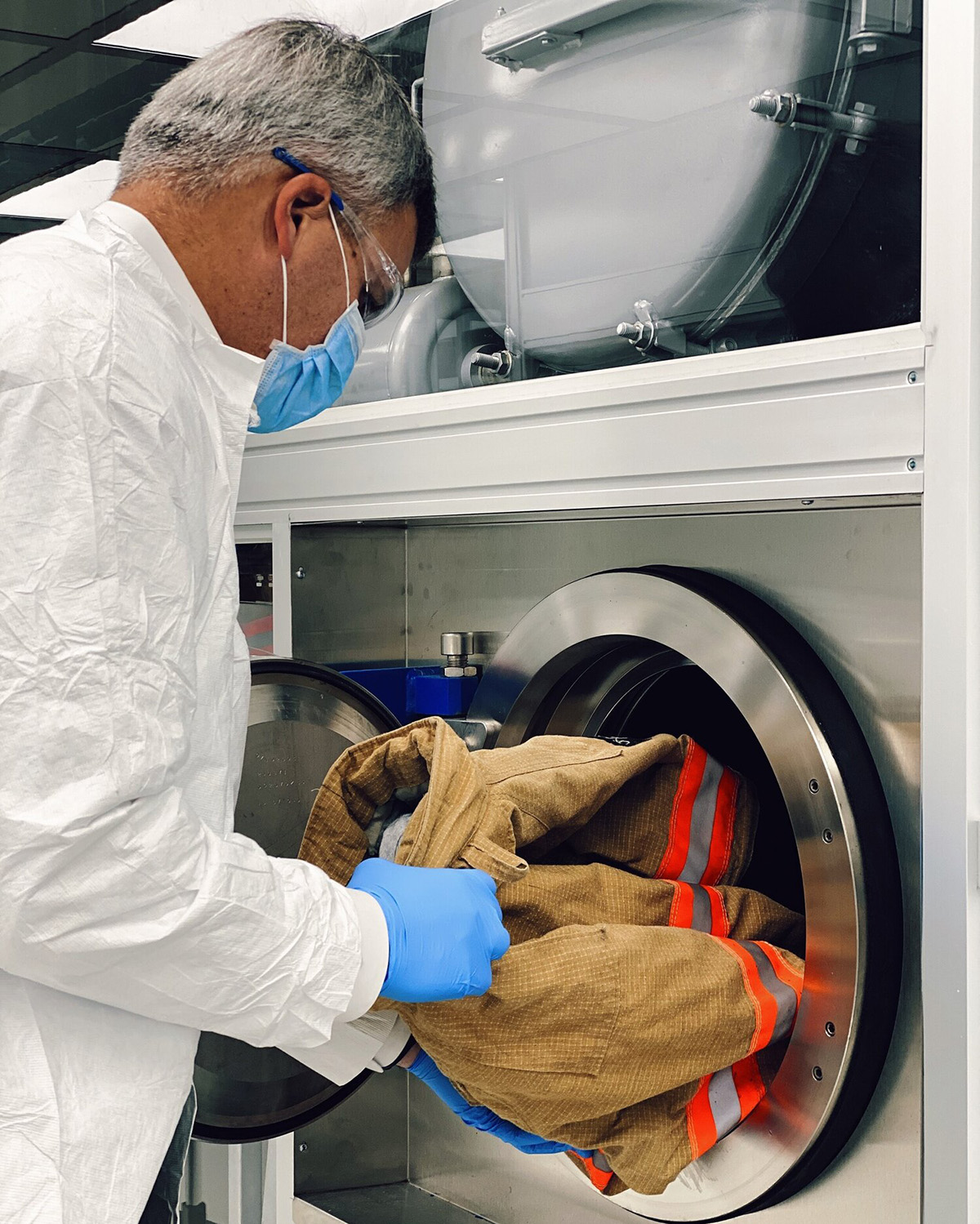
Advanced cleaning technologies, like Liquid CO2+, are designed to address the limitations of traditional methods.
By using optimized solvent conditions and controlled extraction processes, Liquid CO2+ targets contaminants embedded deep within turnout gear, including SVOCs and other persistent compounds.
Independent data shows:
• 99.9% removal or undetectable levels of SVOCs
• 99.8% removal of heavy metals
• Over 84% removal of PFAS
This level of performance helps reduce not only fireground exposure, but also the ongoing, everyday exposure that occurs outside of emergency response.When contaminants are effectively removed, the cycle of re-exposure is broken.
Protecting Firefighters Beyond the Call
The fire service has made significant progress in understanding cancer risk. What studies like MDPI reveal is that exposure is more complex and more continuous than previously thought.
Protecting firefighters requires addressing all phases of exposure – before, during, and after the call. This is not just about responding to fires. It is about managing what comes back with firefighters afterward.
Take the Next Step Toward Continuous Protection
Carcinogen exposure does not stop when the fire is out. The data shows it continues in the places firefighters spend the most time.
Contact Emergency Technical Decon to learn how Liquid CO2+ helps reduce ongoing exposure by removing contaminants at their source – protecting your firefighters on the fireground, at the station, and beyond.