By: Emergency Technical Decon Team
The fire is out, equipment is being packed, and turnout gear still carries soot from the response. Bagging that gear can help contain contamination during transport. Cleaning it addresses a different question: what can be removed before the gear is used again?
Toxic suppression and toxic removal describe different goals in an exposure-control program. Here, suppression means limiting contact with or spread of contaminants; removal means taking contaminants off or out of PPE through an appropriate cleaning process. They work together, and neither should be treated as a guarantee that every exposure has been eliminated.
Toxic Suppression vs. Toxic Removal: What’s the Difference?
A contained turnout ensemble is less available for accidental handling than one left on a passenger seat. The gear still needs cleaning when the bag is opened and the ensemble is handled again.
Removal addresses the contaminated equipment itself. Its effectiveness depends on the substance, the gear component, and the cleaning method. A process that removes visible soil should not automatically be assumed to remove every contaminant within a garment. These terms are being used to explain the goals, rather than to describe two formally standardized service categories. They also do not mean fire suppression versus firefighting. In PPE care, the question is whether a measure is limiting exposure, removing contamination, or doing some of both.
On-scene gross decontamination illustrates that overlap. Preliminary cleaning can remove some contamination before gear is doffed and transported, while also helping limit subsequent transfer. It remains one step in a broader process, with further cleaning decisions made according to the exposure and applicable care instructions.
Why Firefighter PPE Can Carry Contaminants After a Fire
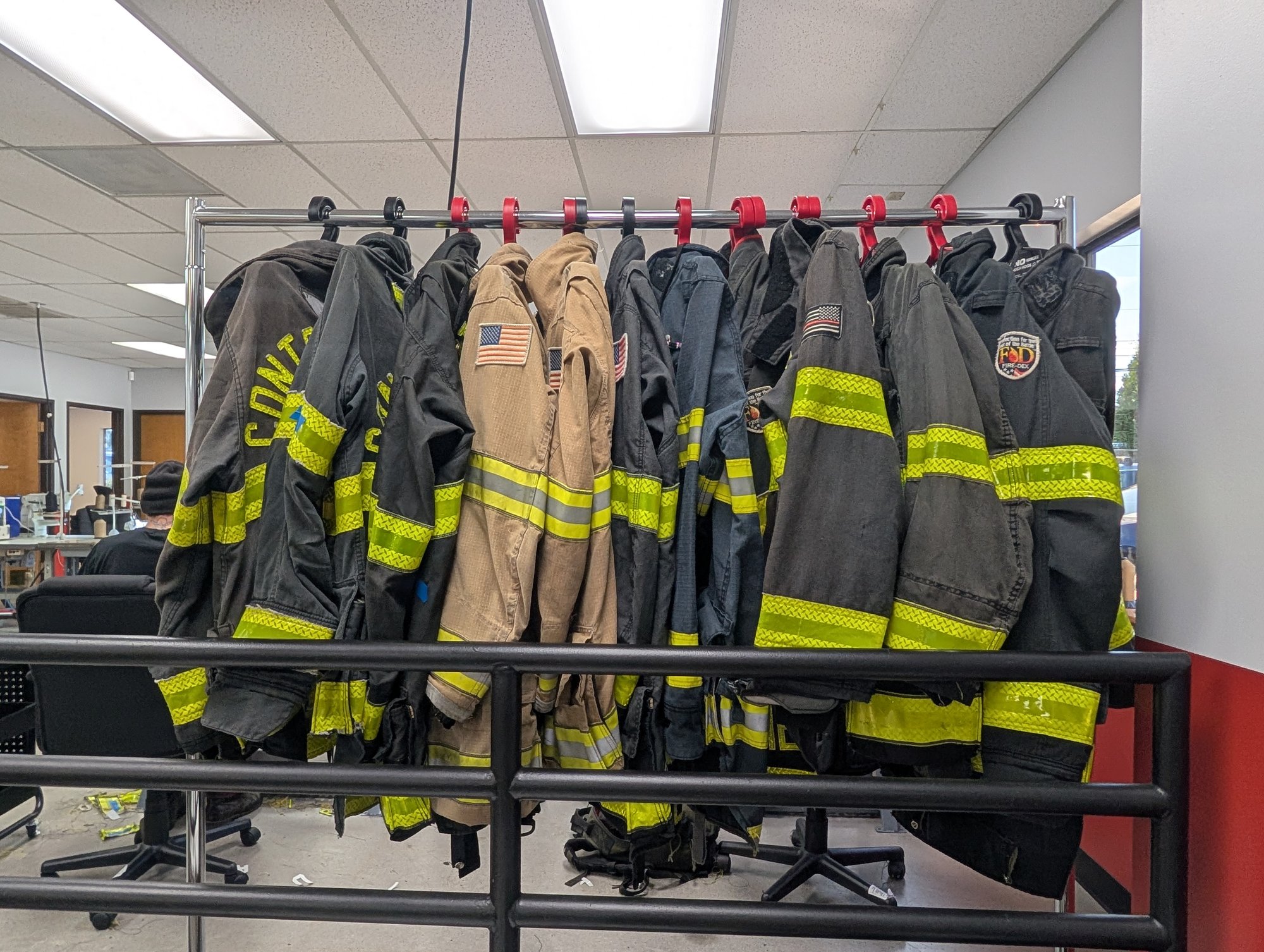
Firefighting PPE protects personnel during hazardous work, but the outside of the ensemble can also encounter the products of combustion and debris. Once the response ends, that material may remain on the equipment that crews need to handle, transport, and eventually wear again.
NIOSH describes how contamination on firefighters’ gear can transfer to skin, equipment, and the station. Its research-based guidance includes preliminary cleaning, careful gear removal, and bagging as ways to help limit exposure. Those measures address different points in the path from the incident to the station.
Departments need to know which ensemble was exposed, how it will be transported, and where it goes next. Without that information, gear can move through the station before anyone decides how it should be cleaned.
Visible condition helps staff assess gear, but it cannot answer every cleaning question. Crews should record the incident context and any unusual exposure, then pass those details to the people responsible for choosing the next step.
Contamination Doesn’t End When the Fire Is Out
Returning to the station is a transition, not the end of PPE care. The crew changes tasks, while the gear still needs an organized route through handling, cleaning, inspection, and release for use. A gap in that route can leave personnel unsure whether an ensemble is ready.
The issue also extends beyond the person who wore the gear. Anyone receiving, moving, or processing it needs to understand its status. Labeling and communication help prevent exposed equipment from being treated as equipment that has already completed the cleaning process.
Managing station contamination requires attention to where gear travels. Departments can review their receiving areas, transport arrangements, and storage practices to determine whether the intended separation between exposed and cleaned equipment is clear to everyone involved. Departments can test their procedures by following an ensemble after a call: where it is placed, who receives it, how its condition is communicated, and where it waits for service. The handoff should follow a documented process that works across shifts.
Off-site cleaning needs the same review. Departments should identify the destination and track each item sent and returned so the handoff does not depend on a conversation from the previous shift.
Why Suppression Alone is Not Enough
Containing exposed equipment can be useful, but it leaves a later task unresolved. The department still needs to determine how the equipment will be assessed and cleaned. Without that follow-through, a bag can become a place where gear waits rather than a step toward returning it to service.
Suppression measures need a next action: someone to review exposure information and initiate cleaning, plus an approved destination for transport. Each department can set the details within its program, but the handoff needs an owner. Cleaning has limits too. NIOSH’s research on laundering firefighter gear explains that some contaminants can remain after typical cleaning methods. That is a reason to evaluate the method and the gear component, rather than assuming a completed wash proves every contaminant has been removed.
Departments should document what each step accomplishes. Containment limits handling, cleaning treats contamination on or within the equipment, and inspection evaluates its condition. The record should distinguish completed work from decisions still pending.
Why Advanced Cleaning Methods Matter for Firefighter PPE
Selecting a cleaning method requires more than deciding whether gear looks dirty. Departments need to understand what the process is intended to remove, which components it can treat, and whether it is appropriate for the protective equipment involved.
Useful questions for a cleaning provider include:
- Which gear components can this process treat?
- What contaminant-removal evidence supports the process?
- What are the limits of that evidence?
- How are unusual exposures or damaged items handled?
- What cleaning and condition records accompany the returned equipment?
A provider’s removal evidence should identify the tested contaminants and conditions. Departments should not extend those results into a claim that every item is free of every hazardous substance.
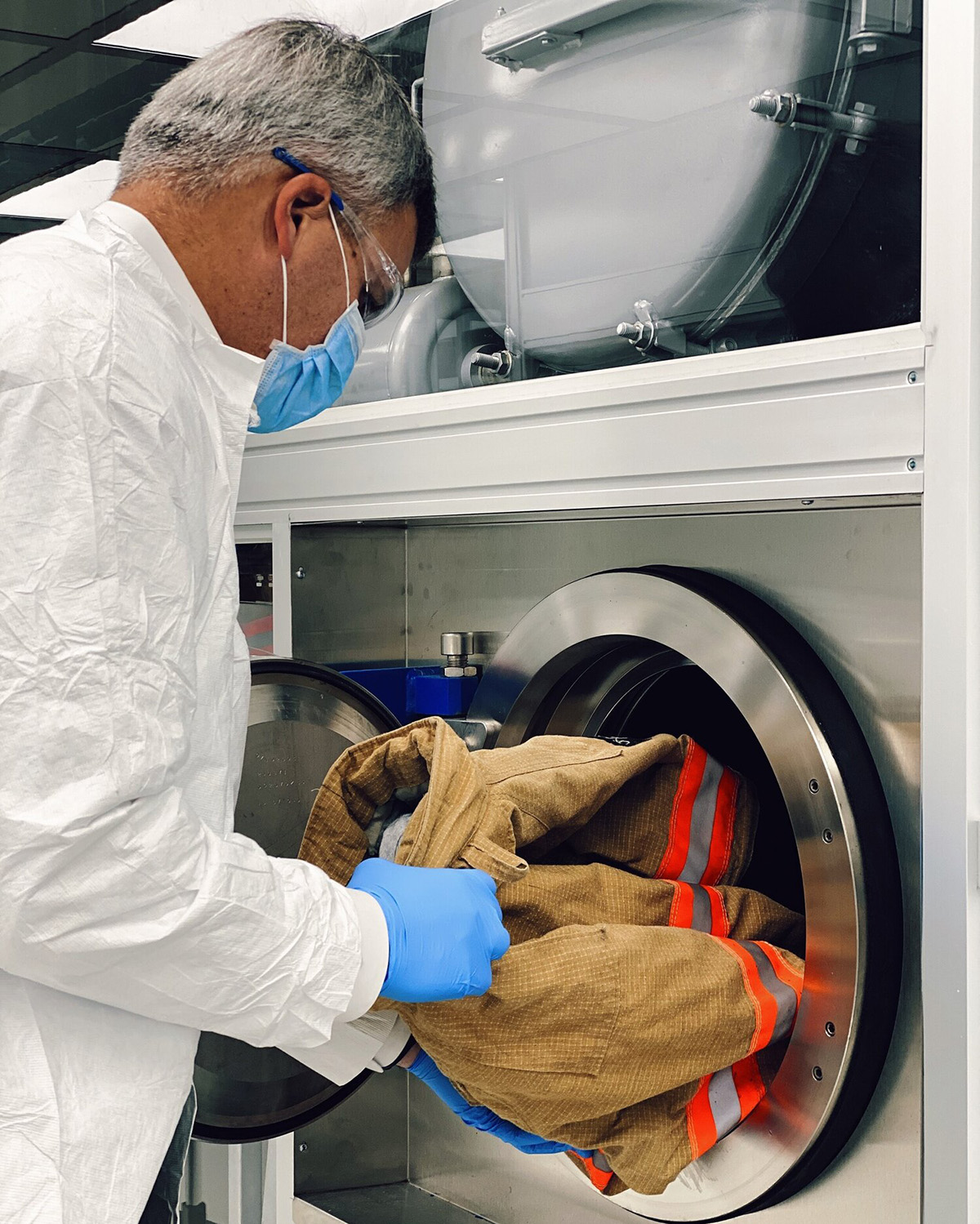
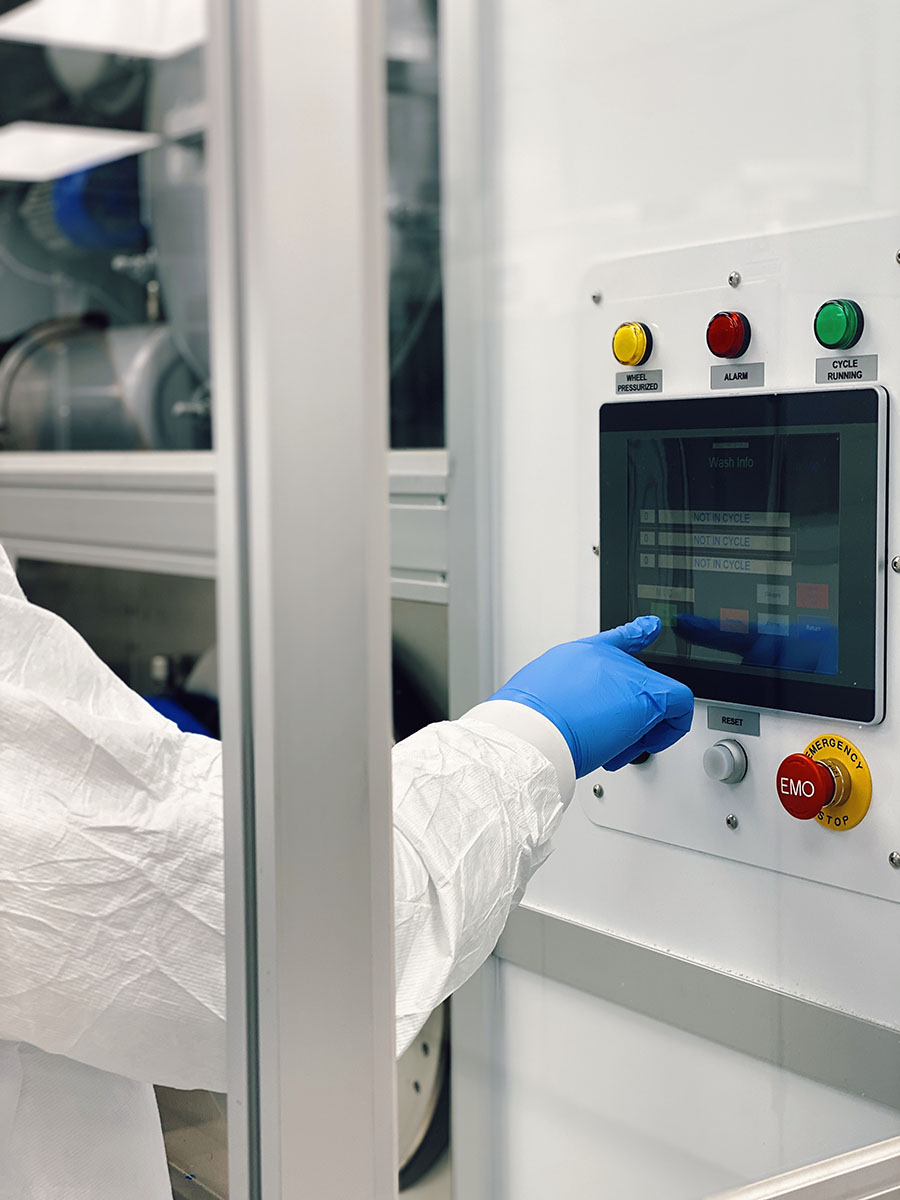
Emergency Technical Decon (ETD)’s Liquid CO2+ cleaning is a specialized approach to removing contaminants from turnout gear. Departments considering the service can discuss their gear, exposure history, and cleaning needs with ETD to understand where the process fits their program.
Specialized cleaning remains one step in gear care. Departments still need appropriate handling and inspection, plus the information required to assess equipment and document service.
Toxic Removal Should Be Part of a Larger Exposure-Control Strategy
Departments can connect on-scene handling with transport, cleaning, hygiene, and equipment-care procedures so exposed gear has a clear route after the response.
A department’s process should cover these decisions:
- Identify equipment that needs assessment after an exposure.
- Use the department’s procedures for preliminary cleaning and handling.
- Communicate exposure information during the cleaning handoff.
- Track cleaning, inspection, and any additional service needed.
- Document the decision before equipment is released for use.
Across shifts, gear managers need a record of work requested, work completed, and decisions still pending. Firefighters should not have to infer an ensemble’s status from where it was placed.
Cleaning records also belong within ongoing turnout gear maintenance. Connecting them with inspection and repair information gives the department a more complete view of each item’s care history. It also helps identify follow-up work instead of treating every service event as an isolated transaction.
Departments also need a plan for routing gear to service and covering the period when an ensemble is unavailable. That plan should work during routine operations and after a demanding response.
From Suppression to Removal: Taking the Next Step
Departments can start at the handoff from containment to cleaning. Receiving staff should know why the gear was sent, and the department should be able to track it through service without confusing it with equipment still waiting.
Departments should examine the evidence behind each cleaning process: what was tested, which limits apply, and whether it addresses their gear. They can then match the service to the need without relying on a broad promise about “clean” equipment.
Handling records, cleaning results, inspection findings, and release decisions give personnel a clearer view of an ensemble’s condition before it returns to use.
Firefighter PPE Decontamination FAQs
What is toxic suppression?
In this context, toxic suppression means limiting contact with or the spread of contaminants associated with firefighter PPE. Containment, controlled handling, storage, and transportation can serve that goal. These measures manage exposure opportunities, but they do not necessarily remove contaminants from the equipment. Cleaning still has a separate role in the department’s exposure-control strategy.
What is toxic removal?
Toxic removal means taking contaminants off or out of firefighter PPE through an appropriate cleaning process. It addresses contamination on the equipment itself, rather than only limiting contact with it. The result depends on the gear, contaminants, and method involved. Removal should work alongside handling, inspection, maintenance, and other exposure-control practices.
What is the difference between toxic suppression and toxic removal?
Suppression focuses on managing contact with or the spread of contamination; removal focuses on cleaning contaminants from PPE. A department can use both approaches in the same workflow. Containment can help manage exposed gear during transport, while appropriate cleaning addresses the equipment afterward. Neither approach alone eliminates every potential exposure pathway.
What is liquid CO2 cleaning for firefighter PPE?
Liquid CO2 cleaning is a specialized approach to cleaning firefighter PPE. Emergency Technical Decon (ETD) offers Liquid CO2+ cleaning for turnout gear. Departments considering this service should discuss their equipment and cleaning needs with ETD, alongside the handling, inspection, and maintenance practices in their broader PPE-care program.
Why is firefighter PPE contamination a long-term concern?
Contamination can remain on PPE after the fire is out, creating further exposure opportunities when gear is handled, stored, transported, or worn again. The concern therefore extends beyond the original incident. Departments need an ongoing process that connects appropriate cleaning with handling, inspection, maintenance, and communication about the equipment’s status before its next use.
ETD’s Liquid CO2+ process addresses contaminant removal within a broader PPE-care program. Is your department evaluating whether specialized cleaning fits its gear-care needs? Contact ETD today.