By: ETD Team
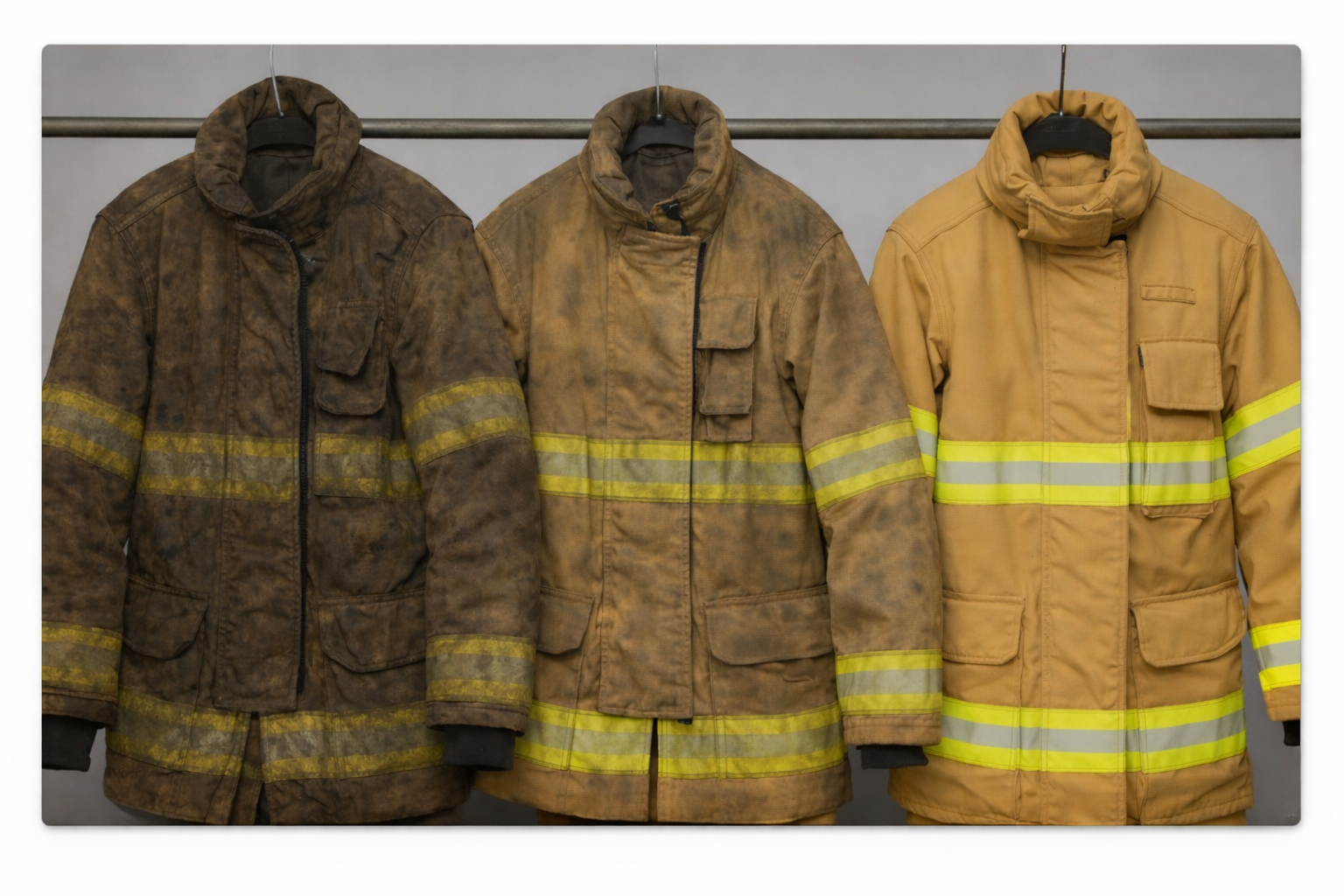
For departments exploring advanced decontamination alternatives to water washing, liquid CO2+ cleaning is often the first technology that surfaces. It is solvent-based, water-free, and capable of penetrating turnout gear more effectively than traditional extraction methods.
But not all CO2 systems are created equal. There is a measurable difference between standard liquid CO2+ cleaning and Liquid CO2+ technology – and when firefighter health, PFAS exposure, and long-term gear integrity are at stake, that difference matters.
Understanding Standard Liquid CO2+ Cleaning
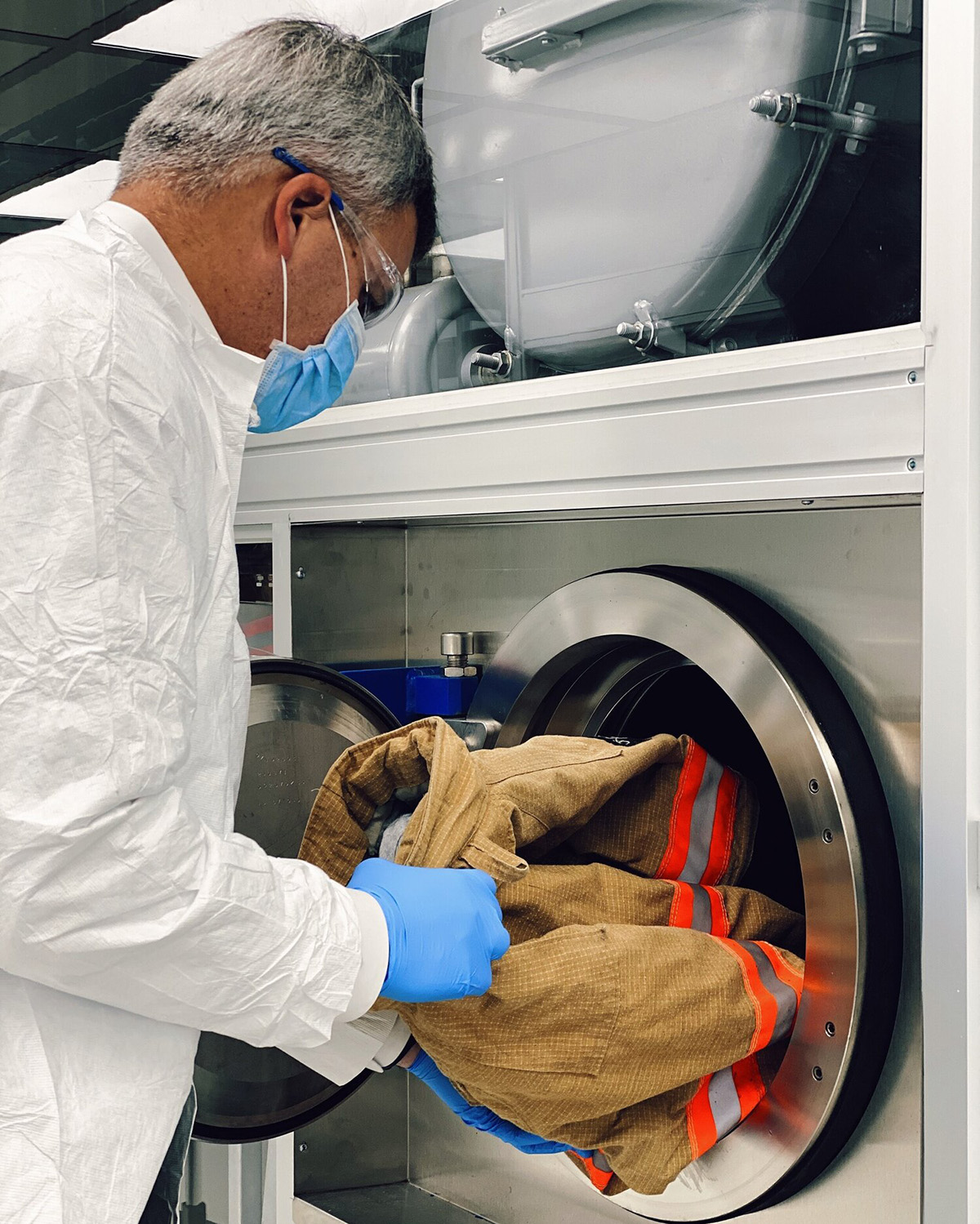
Liquid CO2+ cleaning uses carbon dioxide in a pressurized liquid state to act as a solvent. In this form, CO2 penetrates deep into fabric layers and dissolves oils, hydrocarbons, and certain contaminants that water cannot effectively remove.
Because it is non-aqueous, liquid CO2+ eliminates:
- Water saturation of PPE
- Wastewater discharge
- Harsh mechanical agitation
- Prolonged drying cycles
Standard liquid CO2+ systems represent a significant improvement over water extraction in both environmental impact and fabric preservation.
However, research and laboratory testing reveal limitations when it comes to persistent contaminants like PFAS and deeply embedded SVOCs.
The PFAS Challenge
PFAS, often referred to as “forever chemicals,” – are engineered for durability and resistance to water and heat. Those same properties make them extremely difficult to remove once embedded in turnout gear.
Traditional water washing has been shown to leave up to 84% or greater of PFAS behind. Standard liquid CO2+ improves removal performance, but without enhanced chemistry and optimized cycle design, removal rates can vary depending on contaminant type and concentration. When departments are addressing carcinogen exposure, variability is not acceptable.
What Makes Liquid CO2+ Different
Liquid CO2+ builds on the core advantages of standard CO2 cleaning but incorporates proprietary enhancements designed specifically for firefighter PPE decontamination.
The “plus” represents:
- Optimized co-solvent chemistry to improve contaminant solubility
- Enhanced extraction efficiency for SVOCs and PFAS
- Engineered cycle controls tailored to turnout gear construction
- Advanced filtration and contaminant capture within a closed-loop system
Independent lab testing has demonstrated that Liquid CO2+ removes up to 84% or greater of PFAS contamination from turnout gear. That level of removal is significantly higher than traditional water extraction and represents a measurable advancement in firefighter exposure reduction.
Unlike systems that rely solely on CO2 as a solvent, Liquid CO2+ is designed to address the specific chemical profile firefighters encounter – from structure fires to vehicle fires to lithium-ion battery incidents.
Why Chemistry Matters
PFAS molecules are resistant because of their strong carbon-fluorine bonds. Removing them requires more than penetration – it requires optimized solvency and controlled extraction conditions. Standard CO2 alone may dissolve certain hydrocarbons effectively. But without enhanced chemistry, removal efficiency for fluorinated compounds can plateau.
Liquid CO2+ was developed with this scientific reality in mind. By modifying the solvent environment and refining the extraction cycle, it increases the likelihood that PFAS and other embedded contaminants are mobilized and removed rather than redistributed within the fabric.
Fabric Integrity and Lifecycle Protection
Another critical factor is gear preservation.
Both standard CO2 and Liquid CO2+ avoid the moisture saturation and high mechanical agitation associated with water washing. However, Liquid CO2+ cycle optimization further reduces stress on:
- Moisture barriers
- Seam tapes
- Thermal liners
- Outer shell fibers
Departments investing in PPE expect it to perform to specification throughout its lifecycle. Cleaning technology should not accelerate degradation.
By minimizing mechanical stress and eliminating water exposure, Liquid CO2+ helps preserve thermal performance and extend gear longevity while improving contaminant removal.
Environmental Responsibility
Water washing generates contaminated runoff containing PFAS, PAHs, and heavy metals. Municipal treatment systems are not designed to remove PFAS, increasing environmental liability effectively.
Both CO2 and CO2+ systems operate in closed-loop environments. However, Liquid CO2+ systems incorporate enhanced contaminant capture and filtration, preventing environmental release and supporting compliance with evolving PFAS regulations.
As states continue to introduce legislation restricting PFAS discharge, departments must consider not only cleaning performance but also environmental impact.
Data-Driven Decontamination
In firefighter health, perception cannot replace proof. Liquid CO2+ is supported by laboratory testing that quantifies removal performance, including PFAS removal of up to 84%.
That data allows departments to move beyond assumptions about cleanliness and toward measurable exposure reduction. Standard CO2 is a step forward from water washing. Liquid CO2+ is the next evolution, purpose-built for firefighter carcinogen exposure.
Why the Difference Matters
Firefighters experience cancer rates significantly higher than the general population. Exposure pathways extend beyond the fireground when contaminated gear is inadequately cleaned.
Choosing a cleaning system is not simply an operational decision. It is a health and risk management decision.
When comparing CO2 vs. CO2+, departments should ask:
- Is PFAS removal validated by independent lab data?
- Is the system optimized for firefighter-specific contaminants?
- Does it preserve PPE integrity across repeated cycles?
- Does it eliminate environmental discharge risk?
Liquid CO2+ answers those questions with data, not marketing language.
Take the Next Step Toward Proven Protection
If your department is evaluating advanced decontamination technologies, now is the time to move beyond assumptions and review the data.
Contact us to learn how Liquid CO2+ delivers up to 84% or greater PFAS removal while protecting your gear, your firefighters, and your community.