By: Emergency Technical Decon
Firefighter turnout gear cost is about far more than the upfront purchase price. Between NFPA compliance requirements, inspections, repairs, decontamination, and replacement schedules, the true cost of ownership can impact department budgets for years.
Modern turnout gear is engineered to protect firefighters from extreme heat, carcinogen exposure, hazardous particulates, and dangerous environments. That protection comes with a price tag, but understanding where those costs come from can help departments make smarter purchasing and maintenance decisions.
How Much Does Firefighter Turnout Gear Cost?
The average firefighter turnout gear set can range from $3,000 to more than $5,000 per firefighter, depending on materials, customization, and department requirements.
A complete structural firefighting PPE ensemble typically includes:
| Gear Component | Average Cost Range |
| Turnout Coat | $1,200 – $2,000 |
| Turnout Pants | $900 – $1,600 |
| Helmet | $300 – $700 |
| Gloves | $75 – $200 |
| Boots | $250 – $500 |
| Hood | $50 – $125 |
| SCBA Facepiece Accessories | Varies |
| Name Embroidery & Customization | $50 – $300 |
Many departments also purchase backup sets to maintain NFPA compliance during cleaning, repairs, or extended incidents. This can significantly increase initial investment costs.
Beyond the purchase itself, departments must also account for:
- Routine cleaning and advanced decontamination
- Annual inspections
- Repairs and replacement parts
- Storage and tracking systems
- Compliance documentation
- Replacement of contaminated or damaged gear
For career departments, the total cost of ownership can easily exceed tens of thousands of dollars per firefighter over the life of the gear.
Why Is Firefighter Turnout Gear So Expensive?
Turnout gear is not ordinary clothing. Every component is engineered to withstand extreme temperatures, moisture exposure, carcinogen contamination, abrasion, and physical stress while still allowing firefighters to move effectively during emergency operations.
Specialty Protective Materials
Modern turnout gear uses advanced materials designed specifically for structural firefighting environments, including:
- Nomex®
- Kevlar®
- PBI fibers
- Thermal liners
- Moisture barriers
- Particulate-blocking technology
These materials are expensive to manufacture because they must meet strict thermal protection, durability, and safety standards.
NFPA Certification and Testing
All structural firefighting PPE must comply with NFPA 1971 standards. Manufacturers must subject gear to extensive testing for:
- Thermal protection
- Flame resistance
- Tear resistance
- Moisture penetration
- Visibility and reflectivity
- Heat transfer performance
- Seam strength
That testing process contributes heavily to manufacturing costs.
PFAS-Free Material Changes
As PFAS concerns continue to grow across the fire service, manufacturers are actively adjusting materials and treatments used in turnout gear construction. The shift away from traditional PFAS-based chemistry is influencing both manufacturing complexity and pricing.
Departments are now balancing protection, compliance, durability, and firefighter health considerations when evaluating gear purchases.
Customization and Sizing
Turnout gear is highly customized to each firefighter and department. Custom sizing, department lettering, reflective trim configurations, embroidery, and specialized features all add to the final price.
NFPA 1850 Cost: What Compliance Actually Adds
NFPA 1850 establishes the requirements for selection, care, and maintenance of firefighting PPE. While compliance improves firefighter safety, it also adds operational costs departments must plan for.
Departments are responsible for maintaining gear throughout its service life through:
- Routine Inspections
- Gear must be regularly inspected for damage, contamination, wear, and performance issues.
- Advanced Cleaning and Decontamination
- Contaminated gear must be properly cleaned following manufacturer and NFPA guidance.
- Documentation and Tracking
- Departments must maintain records of inspections, repairs, and cleaning history.
- Repair Management
- Damaged closures, reflective trim, moisture barriers, stitching, and hardware require ongoing repair.
- Retirement and Replacement
- Gear reaching the end of its service life or sustaining irreparable damage must be removed from service.
Firefighter Gear Maintenance Cost
The long-term maintenance cost of turnout gear can rival or exceed the original purchase price over time.
Cleaning Costs
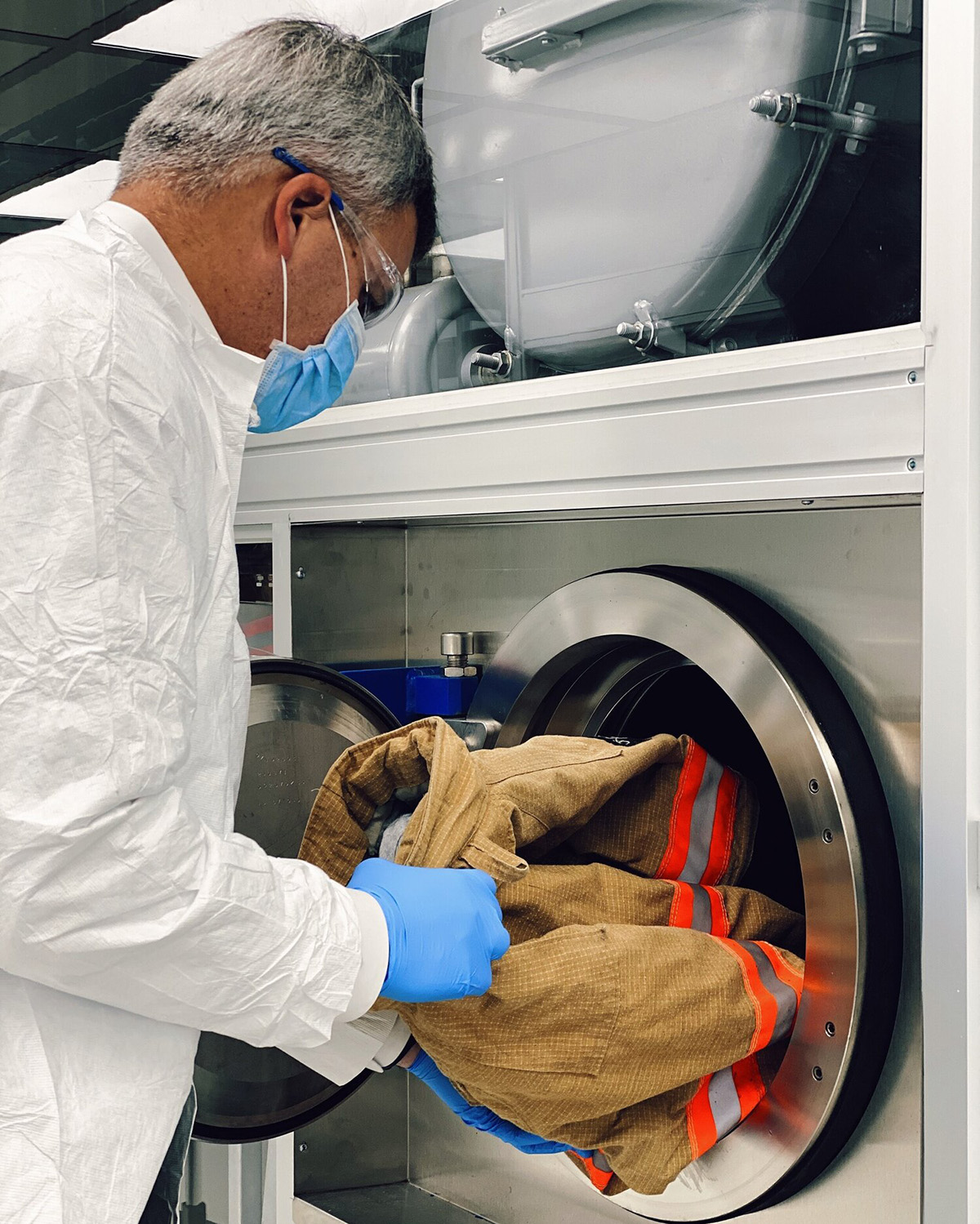
Departments typically choose between traditional water-based extraction cleaning or advanced decontamination methods such as Liquid CO2+ cleaning.
Water washing may appear less expensive upfront, but repeated water exposure, detergent use, and mechanical agitation can contribute to:
- Increased wear on fabrics
- Shrinkage and degradation
- Moisture barrier damage
- Faster replacement timelines
- Contaminated wastewater runoff
Liquid CO2+ cleaning offers an alternative that removes contaminants while reducing water use and minimizing mechanical stress on the gear.
Research and testing continue to demonstrate strong contaminant removal performance, including at least 84% PFAS removal during decontamination.
Repair Costs by Component
Common turnout gear repairs include:
- Reflective trim replacement
- Zipper and closure repair
- Moisture barrier replacement
- Stitching repair
- Thermal liner replacement
- Hardware replacement
Repair costs can range from minor fixes to several hundred dollars per garment.
Inspection Labor
Routine and advanced inspections require trained personnel and administrative tracking. Departments managing inspections internally must account for labor hours and training requirements.
Replacement of Damaged Components
Exposure to heat, UV radiation, contamination, and repeated laundering can shorten gear lifespan and increase replacement frequency.
How Long Does Firefighter Turnout Gear Last?
NFPA standards establish a maximum 10-year service life for structural turnout gear from the date of manufacture.
However, real-world lifespan often varies depending on:
- Frequency of use
- Fireground exposure
- Contamination levels
- Cleaning practices
- Storage conditions
- Repair quality
- UV exposure
Departments operating in high-call-volume environments may see accelerated wear and contamination.
How Cleaning Methods Affect Gear Longevity
Cleaning methods can directly impact turnout gear lifespan.
Repeated water washing and aggressive extraction methods may increase material degradation over time. Moisture barriers, stitching, and thermal liners can experience additional stress through repeated wash cycles.
Advanced decontamination approaches such as Liquid CO2+ cleaning are designed to reduce water exposure while removing contaminants from gear.Proper maintenance strategies can help departments maximize gear lifespan while improving firefighter safety.
Turnout Gear Total Cost of Ownership: A 10-Year Walkthrough
When departments evaluate turnout gear, the purchase price is only the beginning.
Consider a department with:
- 50 firefighters
- Structural response operations
- Primary and backup gear sets
- Annual cleaning and inspection requirements
Year 0: Initial Purchase
Estimated upfront costs may include:
| Expense Category | Estimated Cost |
| Primary Gear Sets | $200,000+ |
| Backup Gear Sets | $150,000+ |
| Customization & Sizing | $10,000+ |
| Initial Inspections & Tracking | Additional Cost |
Years 1-10: Ongoing Operational Costs
Departments must then budget for:
- Routine cleaning
- Advanced decontamination
- Annual inspections
- Repairs
- Emergency replacement gear
- Administrative tracking
- Gear retirement and replacement
Side-by-Side Cost Considerations
| Lower Upfront Investment | Invest and Maintain Strategy |
| Lower initial purchase price | Higher quality gear investment |
| Higher long-term repair frequency | Reduced long-term degradation |
| Faster replacement cycles | Extended usable lifespan |
| Potential contamination concerns | Enhanced contaminant removal |
| Higher cumulative replacement costs | More predictable lifecycle management |
Departments focused only on upfront purchase cost may unintentionally increase long-term operational expenses.
Looking Beyond the Sticker Price
Turnout gear is one of the most important investments a fire department can make. The true cost includes far more than the initial purchase order.
Departments must balance firefighter protection, NFPA compliance, contaminant removal, gear longevity, environmental considerations, and long-term budget management. Understanding the full lifecycle cost of turnout gear can help departments make informed decisions that better protect firefighters while improving operational sustainability.
At Emergency Technical Decon, we work with departments to support advanced turnout gear decontamination and help extend the performance and longevity of PPE through Liquid CO2+ cleaning technology.
Learn more about firefighter decontamination, PFAS removal, and turnout gear maintenance at www.etdecon.com.